by Melinda Brasher

by Melinda Brasher
Showing posts with label historical fiction. Show all posts

Wednesday, September 22, 2021

More good Middle-Grade Books I've Read this Year

 If you saw my posts for The Canyon's Edge by Dusti Bowling and 365 Days to Alaska by Cathy Carr, you'll know that I've been reading some awesome middle-grade novels (and graphic novels!) recently.  Though the two above are my favorites of 2021 so far, here are some other good ones:

Class Act, by Jerry Craft.

Though I didn't find it quite as funny, charming, and subtly powerful as the first book (New Kid), I really enjoyed this graphic novel about a kid navigating both 8th grade and the social/racial/economic divides between his friends.

I don't read a lot of graphic novels, but this is one that makes me want to keep reading them.

Which leads me to...


Pájaro Blanco (White Bird) by R.J. Palacios

I thought it was a bit misleading to call it a Wonder novel, and I had a few issues with the ending, but the main story itself was fantastic.

I started at a little past midnight and finished at 2:30 am.  Reading that long is not something I do much anymore--and I needed to get up at a decent time in the morning--so that's really saying something.

Warning:  because of the content, if you're a parent of a child reading this, you might want to read it too and discuss.


The Great Hibernation,  by Tara Dairman

So, I found rather a lot of plot holes in this book.  But...

It was very interesting watching these kids try to act like adults and keep society going, and I LOVED the creepy downhill slide into oppression.  Chilling...yet it rarely felt heavy handed.  Nicely done. 

I also liked the characters and setting quite a bit. 


A Place at the Table by Saadia Faruqi and Laura Shovan

This book tackles big issues (bigotry, depression, finding belongingness when you feel caught between two countries).  But it also serves a heaping helping of good food and friendship.

The alternating first-person points of view needed to be more distinct, but the writing was engaging.  


Soul Lanterns, by Shaw Kuzki

Some of the writing in this felt clunky and pedantic--especially the parts with the kids 25 years later learning about their own history--but some of that might have been the translation.

The stories of the people who survived--and didn't survive--the nuclear bomb blast in Hiroshima were heart-wrenching and beautifully told.  I cried.  A lot.  It takes a really good book to make me cry.

Thursday, February 25, 2021

Prairie Lotus, by Linda Sue Park


I love the premise of this book—a girl facing not only the normal challenges of life on the prairie—but also facing severe prejudice as a second-generation immigrant with a Chinese-Korean mother (now sadly deceased) and a white father.  It's a sad but beautiful and hopeful story.

Hannah did seem a bit too perfect and some of the other characters a bit too horrible, but I still really liked her and was totally rooting for her the whole way—often rather angrily because people can be so cruel and bigoted.

I was hoping for more historical detail of the kind I loved in the Little House books, like how to make this, and how to preserve that, and how to live without the other thing.  What was included in Prairie Lotus was great  I just greedily wanted more.  I loved the dressmaking and entrepreneurial details.  I loved her interactions with the Native Americans.  I loved the school curriculum.  These were all great.  I just wanted to know more about…I don't know…how to make soap.  Or prime a pump.  Or make salt pork (which was mentioned). Or communicate (by letter? telegraph?) with the stores they order things from (is there a catalogue?).  Or find mushrooms to dry for her soup.  Sigh.  I should just stop being greedy.  Or maybe beg Linda Sue Park to write a sequel. 

Occasionally it did feel a bit like historical-fiction-through-a-modern-mindset. That will bother some readers, but I didn't mind. 

The writing was smooth, engaging, and powerful.  The pacing was good.  The plot was interesting.  The ending was not too perfect but yet still satisfying.  I loved the slow development of her friendship with another girl.  Her difficult relationship with her father was well drawn.   

I was sad when it ended—not because of what happened, but because I had no more left to read—always the mark of a good book.

This is at least 4.5 stars, almost 5 (which I don't give out very often to novels).

I've only read one other book by Linda Sue Park:  the phenomenal A Single Shard.  This book has convinced me I need to read all her other books. 

Saturday, January 5, 2019

Before We Were Yours by Lisa Wingate


Heart-breaking premise—even worse for being true.  I'd never heard of Georgia Tann and her kidnapping adoption agency before, and I just can't believe it went on for so long with so many people approving or turning a blind eye.  Sick. 

So this horrible history makes for an equally heartbreaking novel.

The writing was very good and emotive, the characters interesting.  It absolutely held my interest, though some of the political stuff did go on a little long, as did some other sections in the modern narrative.  The historical narrative was engrossing. 

I'm not an expert on the dialects the author portrayed, but they seemed spot on without being distracting.  That's not an easy feat

I appreciated that the ending wasn't completely happy, yet managed to bring some closure. 

I wished the obligatory romance had been skipped here, since I firmly believe some books are stronger without forcing a romantic love story into them.  This is one of those books.  It's about familial love.  Why can't it just be that?  However, this is my very subjective opinion.

I would recommend this book, though fair warning:  it's not a happy read.

I'm interested to explore more of Lisa Wingate's novels. 

Monday, December 17, 2018

The Night Diary by Veera Hiranandani


This was very good and sad, about a historical event I rather shamefully didn't know much at all about.  In 1947 India gained independence from Britain and split into two countries:  India and Pakistan.  Pakistan was for the Muslims.  India was for the Hindus and everyone else.  If you were caught on the wrong side of the border at the partition, you had to leave.  Violence broke out.  Many people died.  Many more lost everything.  How can normal people become so violent and hateful, especially when they have been coexisting for years?    

And why do we never learn?

The writing was good, but as always in the diary format, I had a bit of a hard time suspending my disbelief.  When you're writing in your diary, you don't remember long conversations exactly.  A diary is also a rough draft, so it's hard to read something polished and sometimes poetic and believe it's a diary entry.  Especially when it somewhat artificially builds suspense.  But this is just my own personal, subjective problem with the diary format.  The format does have its poignancy, especially since she's writing to the mother she never knew.

I liked the characters and the sense of setting and history and the cooking details.  The pacing was good. 

It got just a tad heavy-handed in parts.  I think the message could have been stronger if it were a little more subtle.

I love the way historical fiction can bring to life something you may have only read dry dates about in some history class.  And this particular event is something that is very, very relevant today. For that alone, it's worth reading.  Of course, the people who need to read this are probably the people who won't.  Still, every soul touched, every mind changed, is valuable. 
  
I would recommend this and I would certainly read more by Hiranandani. 

Friday, August 11, 2017

Best movies I've seen this year--some common threads

I was pondering the best movies I've seen so far this year, and I realized that they all have a few things in common.  See if you can figure it out:

Bridge of Spies
Hidden Figures
The Zookeeper's Wife
A United Kingdom

Things I found in common:
-All take place in the recent past
-All are based on true stories
-All feature some aspect of politics
-All feature some sort of prejudice/segregation and the fighting of it
AND...
-All are based on books.

Yay for books!

Bridge of Spies is based partly on Strangers on a Bridge by James Donovan


Hidden Figures is based on Hidden Figures:  The American Dream and the Untold Story of the Black Women Mathematicians who Helped Win the Space Race by  Margot Lee Shetterly


The Zookeeper's Wife is based on The Zookeeper's Wife; A War Story by Diane Ackerman


A United Kingdom is based on Colour Bar;  The Triumph of Seretse Khama and His Nation by Susan Williams


Friday, July 21, 2017

The Wonder by Emma Donoghue

This was a very good book, though I think it would have been even better as a novella. There's not quite enough to fill a novel, but it's too much for a short story. Of course, novellas don't sell...[sigh]. Anyway, if it were shorter, some of the first part could be trimmed, because it gets a bit samey. With too much repetition it's easy to lose impact. For example, Lib's snide skepticism and anti-religious thoughts eventually stop being culturally interesting and start coming off as just plain mean-spirited. The hints of various truths are too numerous, leading to a loss of impact when Lib figures out a couple of things that we—the readers in her head—have all known for a long time. In the last third or so of the book, these problems disappear and the story wraps you up in its tension and suspense.

It is a very, very interesting concept, a very interesting catch-22, a very interesting historical setting. We get a great feel for the time and the very small world some of these characters inhabit.

The writing is very good.

Now, this is very subjective, and not a deal-breaker for this book, but here's my issue with—for lack of a better word—Hollywood. Not every book has to have a romance! Romance is fine, but it's not the only thing interesting to read about. A book can be complete—and sometimes even stronger—without the protagonist having a romance This is one of those cases. The story is about Lib and Anna. The romance feels quite tacked on. It kind of works in the very end, but there could have been a similar and just as satisfying ending without the out-of-character love story. Others will certainly disagree.

The last few chapters are very good—and I'm one who usually prefers middles. The book is disturbing and thought-provoking and eerie...yet strangely heart-warming. I really did enjoy it.  A strong four stars.  I'm guessing that if Donoghue had felt free to write it exactly as she wanted, without any regard to what would sell, it would have been five stars.

I'll read more of Emma Donoghue in the future.

Monday, April 17, 2017

Behave, by Andromeda Romano-Lax


This is a strange book.  In a good way.

The writing is evocative, the setting and time period rich and convincing. The tone and style are nearly perfect for the era and subject matter.

I found it very engaging...even though I usually disconnect somewhat when I don't admire any of the characters. While I sympathized with Rosalie, and found myself wanting to like her, I couldn't quite get over some of what she allowed/condoned. I didn't like John Watson much at all, but he was a undeniably fascinating character. This complexity kept me interested, kept me thinking about it even after I finished.

I do rather wish I had read the author's notes at the back first, because I read the novel assuming that it was based on known facts about Rosalie with details filled in by the author, when it turns out most of Rosalie's story was pure invention. That always confuses my sense of truth and makes me doubt the parts that really were based on fact. However, this is just my own personal problem with historical fiction. Besides, we all know how accurate our “true” histories are.

What follows is not exactly a criticism of the book. It's a criticism of Watson, Rosalie, and all their associates. Okay, here goes: those real-life experiments with infants were unbelievable. Bad enough was the sheer cruelty of it: practically torturing unwilling and defenseless subjects in the quest to permanently leave them negatively conditioned. Um...unethical? 

 But even if you accept that Watson was an unethical man, or a man with twisted Machiavellian ethics, I had a hard time believing his scientific method (or lack thereof). He was supposedly a great scientist, as was Rosalie, but their experiment structure was so flawed that I—not a scientist—saw the giant problems. For example, with the Albert B experiments: One subject? Really? Tests that change more than one variable at a time? And then you modify the experiment midstream to try to get the result you want? So unscientific. And it's sickly irresponsible to base entire child-rearing theories on insanely small sample sizes of relatively short duration that—even if they were more scientific and duplicatable—wouldn't prove as much as you claim they prove. So why did no one really question his methods at the time? 

 I think the novel could have more fully explored these issues, really examining the psychology of seeing what you want to see instead of what really IS, of letting yourself get swept away in bad science for some imagined greater good or because of the authority-in-a-white-coat phenomenon or because you're in love or in lust. And what about dealing with the guilt when you finally understand what you did? All of this is addressed to a degree in the book, some of it quite elegantly, but I would have liked to have seen less of the romance in favor of a deeper treatment of these and other more interesting topics.

It's a compelling book. I would certainly read more by Andromeda Romano-Lax.   

Four Stars

Thursday, February 2, 2017

All the Light we Cannot See, by Anthony Doerr

This was a beautiful book. Sad, brutal at parts, but beautiful. It puts a very human face on the tragedy of war, and does so in a fresh way.

The writing is at times too descriptive for my personal tastes, a bit too poetic, and I do sometimes wonder if someone who uses the verb “purl” twice within twenty pages is maybe trying a little too hard. However, this is all very subjective, and overall I really liked and admired the writing itself: the velvety language and unusual combinations, the perfect choice of details, the slow builds.

The main characters were well-drawn and I the author made me love them.

The story moved slowly at times, but in that rich, beautiful way that I like.

The plot was engaging, all the separate strands working well together.

I did get temporarily confused sometimes with the time jumping because the author didn't always do enough to orient us at the beginning of each jump, instead just dating the sections and expecting us to remember the dates of the others sections. I never remember dates like that, so I had to flip back and forth a couple of times. Still, a minor issue.

I did wonder about a few small details, like the can of homemade peaches. Wouldn't it be a bottle? A few things about the resistance's communication didn't quite make sense to me either, but that was probably just me. Again, tiny issues in such an good novel.

The ending worked for me, though most if it was pretty sad. Yet amid all the sadness--through the whole book--there was hope and beauty too.


A very, very good book.

4.5 Stars   

Tuesday, January 3, 2017

Reading Challenge 2016--Mission Accomplished

On Goodreads' 2016 challenge, I set myself to read 30 books.  I read 32.  If you want to check them out, here's the link.

Probably my favorite two books were Broken Angels by Gemma Liviero and The Railway Children by E. Nesbit.  Also very interesting:  Whistling Girls by Barbara Paetznick, The History of Love by Nicole Krauss, The Good Soldier Svejk, by Jaroslav Hasek, and To the Bright Edge of the World by Eowyn Ivey.

The Railway Children by E. NesbitBroken Angels by Gemma LivieroWhistling Girls by Barbara PaetznickThe History of Love by Nicole KraussTo The Bright Edge of the World by Eowyn Ivey

Friday, October 28, 2016

Most interesting books read so far in 2016

I'm just about to finish reading my 30th book this year.  Here are a few of the most interesting or enjoyable ones:

--Hunting Monsters:  Crytozoology and the Reality Behind the Myths
by Darren Naish 
An exploration of the evidence of creatures like bigfoot and the Loch Ness monster.  Mostly it debunks the myths, but in a way that leaves it open to possibility and philosophizes a bit on why so many cultures have similar myths.  It got quite repetitive, but if taken in small bits, it's very interesting.

--The Railway Children  
by E. Nesbit
This novel is my only 5-star rating of the year (so far).  It's warm and charming, and despite everyone being a little too perfect and everything working out a little too well, I loved it.  

--Wealth Woman; Kate Carmack and the Klondike Race for Gold
by Deb Vanasse 
A well-researched account of the life of Kate Carmack, the native wife of the man credited with starting the Klondike Goldrush.  I especially loved the parts about how her culture viewed certain actions and social encounters differently than her husband's culture, leading to various conflicts and misunderstandings.

--At the Water's Edge
by Sara Gruen
Rich, idle young people in World War II go looking to find vindication in the form of proof of the Loch Ness Monster.  Like an unfortunate number of other books, I really enjoyed the first two-thirds of this book.  Unique premise, great historical detail, lots of culture shock, good writing.  And then it just turns Hollywoody.


--Broken Angels
by Gemma Liviero
I almost gave this five stars.  It takes place in WWII, but has some very interesting characters in situations we don't always see in WWII novels.  I grew to love the characters, and I read the last twenty percent or so absolutely rapt, not stopping for anything.

--Caretaker
by Josi Russell
A man has spent 5 years alone in space on a colony ship, taking care of all the people in stasis, even though the computer really does almost everything.  This part is fascinating--the endless loneliness, the feelings of uselessness, the grief for his wife who remains in stasis while he will age 50 years.  Then someone else wakes up.  Also interesting.  But then the author goes and ruins it all by introducing unrealistic magical aliens and sudden superpowers.  Still, the first part was enough to make me include it here.

--Tisha
by Robert Specht
Based on the story of a young woman who goes to the Alaskan frontier as a school teacher.  Very interesting culturally and historically, if a bit preachy.
Also some plain good adventure--with a bit of romance.

--A Wild Sheep Chase
by Haruki Murakami
Okay, I included this not because I liked it (which I only sort of did), but because I'd heard so much about the author and this was my first experience.  And it was...interesting.  I thought the writing was mostly quite good, with some unusual perspectives.  The premise was crazy in a cool way.  But the end...I guess I just don't like implausible wild goose chases.

--The History of Love
by Nicole Krauss
Beautiful writing, though sometimes too stylistic for my tastes.  Fantastic characters.  Distinct voice.  Sad ending with a little hope.

--The Good Soldier Svejk (pt 1)
by Jaroslav Hasek (translated by Zdenek K Sadlon)
Part BRILLIANT dark humor and social commentary, part heavy-handed ranting, this is an interesting book, and one of the big Czech classics.  Some parts dragged.  Others were immensely entertaining.  And Svejk's character is fascinating.  He's a national icon for a reason.  Read it and see.
                      

Thursday, May 19, 2016

Broken Angels, by Gemma Liviero

4.5 stars easily.  Almost 5. 

I often read in short snatches, while I'm cooking or waiting in line, in short intervals between other tasks or activities.  I find that many books can't hold my attention for long periods of time.  But last night I was reading Broken Angels on the bus home from work, a 30-minute trip I didn't notice any of.  I almost missed my stop.  I held my Kindle up to the streetlights as I walked the rest of the way home.  When I got in, I didn't turn on music. I didn't change clothes or get a snack or anything.  I just lay down on the couch and read for an hour, straight through to the end.  I cried. 

That is one of the signs of a good book.

Occasionally the dialogue feels written, the narration a bit too "told," and this distanced me from the characters at first, but overall the writing is clear and powerful, getting better and better as the novel goes on. 

Liviero tells the story from the perspectives of three people experiencing different aspects of the horrors of the holocaust.  This gives the story both depth and breadth.  And the way their lives weave together is both tragic and beautiful.

Before reading this, I knew about the Nazi program of taking Aryan-looking children and Germanizing them, but I hadn't read much about it, and this made it very real.

The dehumanization of people in a Polish Ghetto is also very emotional.  And this is the ghetto, not even the concentration camps. 

The German doctor, Willem, struggles with what's happening, struggling even to let himself fully realize what his country is doing, and that is perhaps the most powerful aspect of the book.

It was a sick, sick time in history, and I think books like this are important, because history does repeat itself.  The more people who are horrified by the hatred, racism, and resulting unbelievable cruelty and disregard for human life…the more people who are aware of how one thing leads to another…the more people who recognize the humanity in all…the more people there will be who will try to break the cycle of history. 


I will definitely read more of Gemma Liviero.  

Sunday, January 13, 2013

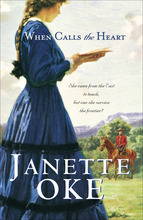
"When Calls the Heart," by Janette Oke


When Calls the Heart, Repackaged Edition
When Calls the Heart, by Janette Oke, is a historical romance set in frontier Canada.  A city girl from the East goes to teach school in Calgary, where her half brother lives.  Immediately assigned to a country school, she learns to adapt to the wilds and love her sweet school children.

The whole book is a little too sweet to be real.  Everyone is so nice and noble and giving except the one school superintendant man who only has a short appearance in the book.  The hero's nearly perfect.  All her students are too well behaved—and eager to learn—to be quite believable.  Still, it's a nice, gentle, CLEAN romance, not just between a man and a woman, but between a frontier school teacher and her new home and her humble students.

My rating:  4

Monday, September 5, 2011

"A Great and Terrible Beauty" by Libba Bray

In my research of literary agents, A Great and Terrible Beauty by Libba Bray came up several times, always in a good light.  Many internet reviews recommend it.  So, because of the build-up, I felt my disappointment quite strongly.  It's the story of Gemma, an English girl raised in India, who goes back to a Victorian boarding school after her mother's mysterious death and the onset of her own strange visions.  There she struggles to find her place and learn about the magic of "The Realms."   

One of my pet peeves in the fantasy genre is unclear, inconsistent, corny, or overly powerful magic.  This had it all.  The many mentions of "The Order" and "The Realms" felt almost spoof-like in their grandeur, especially since I never got a handle on what the Order did or what exactly the Realms were.   Because of this hazy magic, I didn't even really understand what happened in the end, and I didn't care enough to re-read.

I found most of the characters unsympathetic.  I sort of liked Gemma, when she was being spunky, but she was often whiny, and made very dumb decisions.  I really didn't like her friends.  They were by turns shallow or cruel.  They got greedy and betrayed her toward the end, yet that didn't seem to change their strange friendship.  Her lustful dreams and possible romance with Kartik felt tacked-on.  I most liked the one kind teacher, who was dismissed because of the irresponsibility and selfishness of the girls.    

The anachronistic language bothered me.  I don't have a problem with modernizing speech in historical fiction or fantasy, as long as it stays neutral and doesn't get slangy or too modern.  If you try to write it "accurately," it sounds stilted and pushes the reader out of the story.   This balance can be hard to find, but your handsome knight shouldn't call his squire "bro."  Nor should he boast that his steed is faster than a speeding bullet.  Libba Bray didn't go quite that far in A Great and Terrible Beauty, but many phrases and ideas felt too modern.  I believe that was intentional, but it really didn't work or me.

And seriously, who wants to read a book written entirely in present tense?  I've read about three, and hated the gimmick every time.  I admit that Bray does quite a good job of it, and I eventually got so I could ignore it, but…why do it?  What does it add to the story?  And can whatever benefit possibly outweigh the annoyance readers feel?          

I did enjoy some of the social commentary about the inequality and hypocrisy of Victorian (and other) society, and the horror of facing your own future as the meek, speak-only-when-spoken-to property of your husband.  Some of the commentary got pretty heavy-handed, but it was still thought-provoking.

The historical details and interesting settings, along with the always-entertaining boarding school power struggles, satisfied me enough that I kept reading, but it felt a bit like a chore.

My rating:  2+