A blog for people who don't want to spend all their free time in the real world. After all, we live and work there. Escape the mundane with books, travel, and writing.
by Melinda Brasher
by Melinda Brasher
Showing posts with label guest posts. Show all posts
Thursday, May 18, 2017
Pen Name or No Pen Name
Have you ever wondered why some writers use pen names?
If you're a writer, have you ever thought about using a pen name yourself?
Well, you're not alone. Here's my little post on the subject, over at Writers On the Move
Sunday, April 30, 2017
10 Things to See in Rome, a guest post by Diane Frisch
![]() |
| Dome of St. Peter's Basilica. Photo by Diane Frisch. |
When in Rome, there are certain sights that you really should not miss. These are my top picks.
1) The Colosseum - This may be the first image that comes to mind for most folks when we think of Rome. It is spectacular! Located in the center of the city, this is the largest amphitheater EVER built and dates back to around the year 80AD. We really enjoyed having a guide take us through and explain the place to us and the bloody spectacles that went on there. It was not pretty.
![]() |
| Interior of the Colosseum. Photo by Diane Frisch |
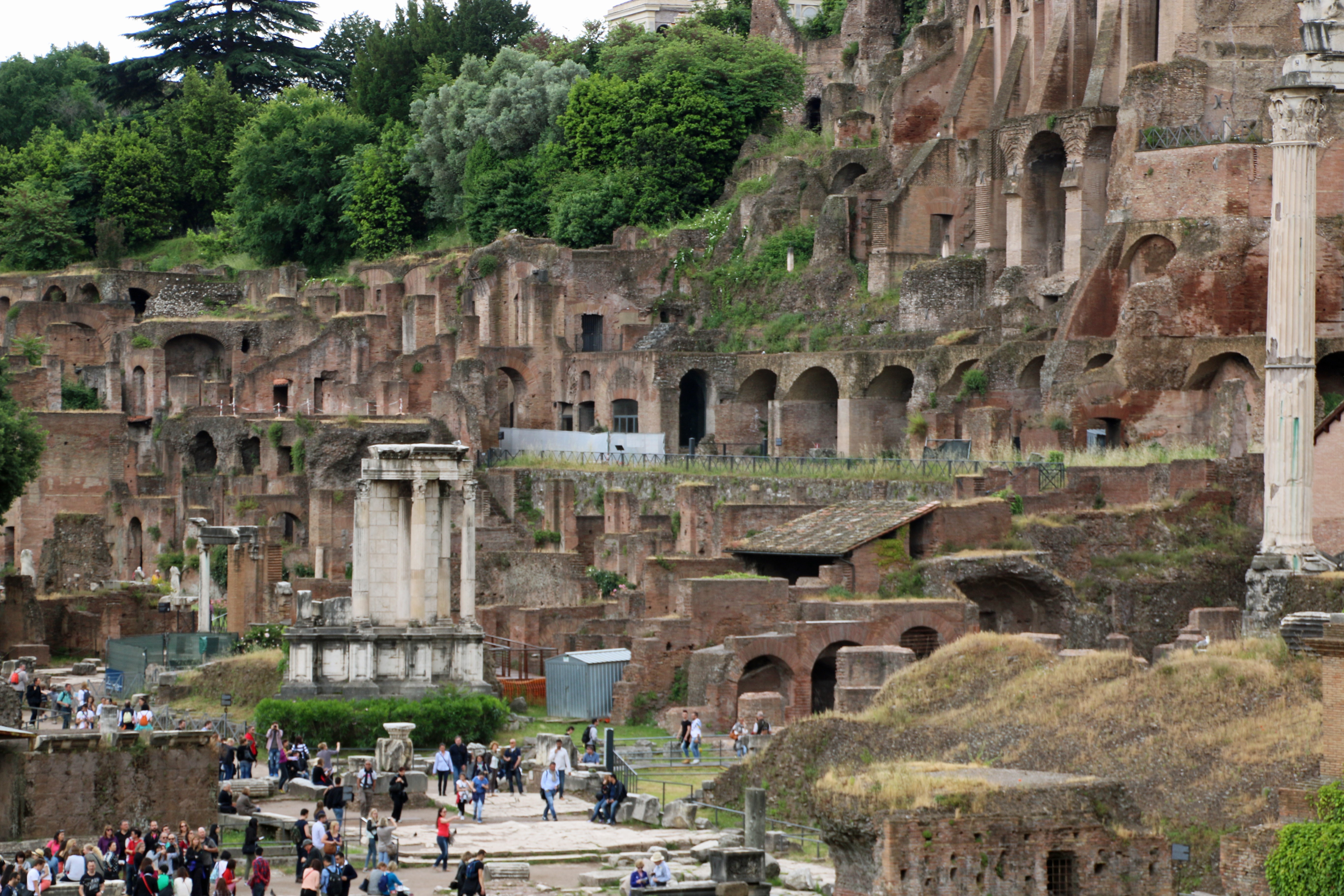
2) The Forum/Palatine Hill - Located not far from the Colosseum, the Forum was once the center of all things in Rome, and later as Rome's influence spread, it was the center of the civilized world. In this area you will find, Palatine hill and the Forum. It is chock full of ruins that span about 1000 years. There are "layers" of ruins built upon top of ruins. It is fascinating and a little bit hard to follow without a guide to explain it all to you.
![]() |
| Roman Forum. Photo by Diane Frisch |
![]() |
| Interior of Saint Peter's Basilica. Photo by Diane Frisch |
![]() |
| Sistene Chapel. Photo from museivaticani.va |
5) The Vatican Museum - Technically includes the Sistene Chapel, but houses 4 miles of collections and also requires modest dress. Highlights include the fantastic collection of Greek and Roman statues, and the frescoes in the Raphael Rooms.
![]() |
| Hallway in the Vatican Museum. Photo by Diane Frisch. |
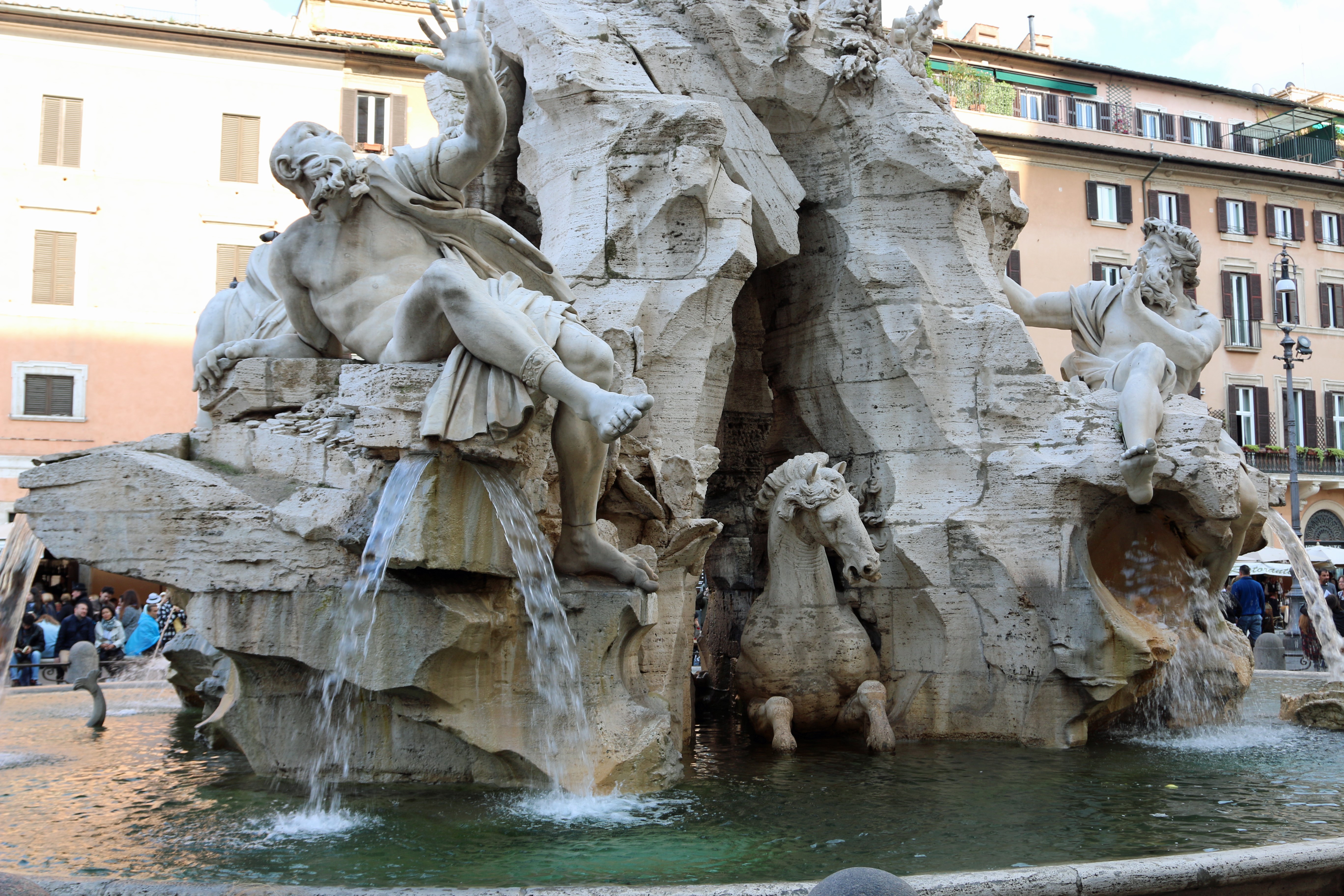
6) Piazza Navona - This is a beautiful and very large Piazza. In the center is the Four Rivers Fountain, designed by Bernini in 1651. All around you will find beautiful buildings, and churches with art by Caravaggio and Rubens. In this area you will find a center of pubs, cafes, nightlife, and a personal favorite, delicious gelato
7) The Fountain of Trevi - Recently restored, this is another iconic symbol of Rome. Tradition holds that if you throw a coin in the fountain, you will guarantee a return to Rome. This is a bustling tourist spot, but definitely worth a visit while in Rome.
8) The Spanish Steps- This is a great place to people watch, enjoy some street music, and shop in the Piazza di Spagna district at the base of the steps.
9) The Pantheon - The most notable thing about this ancient church, in my opinion, is the wide opening in the center of the dome. It lets in an abundance of natural light, and also rain, depending upon the weather. The dome is the widest masonry dome in all of Europe, at 142 ft high, and 142 ft wide. This building was built in AD 118 by architect Hadrian, as a pagan temple. It was donated by Emperor Phocas to Pope Boniface IV in 608. It still serves as a Catholic church.
10) The Catacombs- Here you will find the burial tunnels of Rome's early Christians beneath the roads leading out of town. A guided tour will show you a subterranean chapel, tombs and even some frescoes and engraved slabs from the burial sites of the early Christians. I found this extremely interesting to visit with our knowledgeable guide, but I will warn you that some folks find the tunnels a bit claustrophobic
![]() |
| Bernini's Four Rivers Fountain in Paizza Navona. Photo by Diane Frisch. |
![]() |
| Lunch break with the kids at Piazza Navona. |
7) The Fountain of Trevi - Recently restored, this is another iconic symbol of Rome. Tradition holds that if you throw a coin in the fountain, you will guarantee a return to Rome. This is a bustling tourist spot, but definitely worth a visit while in Rome.
![]() |
| Trevi Fountain. Photo from trevifountain.net |
![]() |
| Spanish Steps. Photo by Diane Frisch. |
9) The Pantheon - The most notable thing about this ancient church, in my opinion, is the wide opening in the center of the dome. It lets in an abundance of natural light, and also rain, depending upon the weather. The dome is the widest masonry dome in all of Europe, at 142 ft high, and 142 ft wide. This building was built in AD 118 by architect Hadrian, as a pagan temple. It was donated by Emperor Phocas to Pope Boniface IV in 608. It still serves as a Catholic church.
![]() |
| The Pantheon. Photo by Diane Frisch. |
![]() |
| Photo from Wikimedia.org |
11) EAT! Gelato! Pasta! Pizza! Vino! I know this isn't a place to visit, but Wow, everything is so delicious. Eating your way through town is a BIG part of any visit to Rome! Ask locals for recommendations or just look around and see where the locals are going. This city is a feast for all of your senses, INCLUDING taste. In the photo below, I am at a lovely little restaurant just off of the Piazza Navona, da francesco. I recommend it!
IMPORTANT TIP: The Colosseum, Forum, and all the Vatican sights get very crowded. Buy your tickets in advance or take a "skip the line" or VIP access tour to save wasting hours in line. If it is possible, consider visiting in the "shoulder seasons" of spring and autumn to avoid the big crowds.
Please visit my Blog to follow me on more travels near and far! travelswithdianeblog
Thursday, April 20, 2017
Nathaniel Danes's Guest Post: Seeds of Imagination
Here's a great guest post from Nathaniel Danes, a fellow writer:
I
can't speak for any author other than myself but I find the world
ripe with seemingly insignificant scraps of information begging to be
nurtured, grown into a story. I look at my ordinary life with the
goal of finding hidden adventure.
I'm
low vision, functionally blind in most situations. As you can guess,
my degrading retinas restrict what I can do in the real world. I love
skiing, scuba diving, and a host of other activities I can no longer
do, or do how I want to do them. This fighting retreat has been the
story of my life since being medically discharge from the Army at the
old age of seventeen, following my diagnosis.
Simply
put, I can't live the life I want to so my imagination has become my
keep. My final impenetrable stronghold, impervious to the ravages of
my affliction. I can go anywhere and do anything. It's an escape I
utilize regularly.
Maybe
it's just me because my mind is so desperate for new material to chew
on but I'll grad ahold of a minor piece of information and build an
entire universe around it. That's how my latest novel, BattleMaster
was born.
Several
years ago I saw a short segment on TV about the US Air Force's
experiments with craft controlled by a pilot's brainwaves. The pilots
were hooked up to simulators but the results were still very
interesting. A female subject remarked that initial findings
suggested women were better at this method of operation.
The
seed had been planted.
That
fact whispered in my ear for years and I combined it with others I
picked up. Such as, knowledge the female brain is wired to maximize
multitasking while males are superior at focusing on a single
objective. Both have their advantages and are likely a result of
survival demands dating back millennia. Men hunting and providing
protection while woman cared for the young and performed any number
of important tasks.
Theses
two bits of information are what formed the roots of BattleMaster. I
asked myself, if women are better at multitasking and the future of
warfare is drone based, wouldn't they one day reign supreme on the
battlefield? My imagination went from there and the story blossomed
until it found its way to the page.
So,
pay attention to the world around you. Seeds of imagination are
adrift everywhere.
Nathaniel Danes is a
self-diagnosed sci-fi junkie and, according to his wife, has an over
active imagination. Mostly blind, he writes to create universes where
he has no limitations. He lives with his wife and daughter in the
Washington, DC area.
Website:
www.nathanieldanesauthor.com
Monday, April 10, 2017
Guest Post: Alaska Cruising Highlights
Check out my guest post on the Page Turner, Vicki Goodwin's site. It's an article about some of my favorite experiences cruising Alaska. And it's got pictures.
While you're there, check out some of the Vicki Goodwin's posts about books and authors.
If you want to know more about how to see Alaska for yourself,
Saturday, March 11, 2017
4 Books Everyone Should Read--Guest Post
Here's a guest post from Cassie, an avid reader:
Whether
you’re taking the bus to work or on
an amazing trip through the Czech Republic, a good book is the
best companion. There’s the classics of course, but if you’re an
avid reader you probably have already read through most of them. Or,
if not, they’re at least on your to-do list. However, there are
plenty of amazing books that might not be considered ‘classics,’
but that will absolutely keep you engaged from beginning to end and
may end up being one of your favorites.
If
you’re an avid traveler, you might want to consider getting these
books in digital format whether as an audiobook or eBook. The best
part about doing this is that you can always download these while
you’re on-the-go. Just remember to use a virtual
private network when using public WiFi so that hackers can’t
steal your credit card info.
The
Amazing Adventures of Kavalier & Clay
Set
during WWII, this Pulitzer-winning book combines the world of comic
books with the horrifying reality of war. It follows Joe Kavalier as
he and his cousin Sammy Clay attempt to make a living for themselves
creating comics. Chabon expertly weaves together reality and art
until it becomes impossible to tell the two apart. Besides this, this
book also blends the history and development of comic books, magic,
Jewish mysticism and even a little romance.
The
Phantom Tollbooth
While
technically a middle reader, The
Phantom Tollbooth
will capture the imagination of adults and children alike. For young
Milo, everything seems boring. That is until a tollbooth appears in
his room. Curious, he decides to take his toy car and drives through,
only to be teleported to exciting new worlds. Thus, Milo’s journey
begins. What sets this book apart from other fantasy adventure
stories is its focus on wordplay and the transformative power of
words. At every turn there’s another surprise waiting around the
corner proving that even everyday events can turn into magical
occurrences.
The
Hitchhiker’s Guide to the Galaxy
Get
ready for the wackiest interstellar journey of your life. The
Hitchhiker’s Guide to the Galaxy
is pretty much a spoof of every science fiction novel you’ve ever
read complete with a hapless hero, a hyper-dimensional space trace, a
depressed robot and aliens who want to destroy the Earth (though it’s
not personal). There are countless one-liners you likely see now in
pop-culture such as the meaning of life is 42. And let’s not forget
the ragtag band of characters and hilarious humor sprinkled
throughout the book. This book is part of a five-book series, so if
you like this one, there is plenty more adventure out there to enjoy.
The
Hero’s Guide to Saving Your Kingdom
Being
Prince Charming isn’t all sunshine and roses. In fact, it’s hard
and often unappreciated work. The
Hero’s Guide to Saving Your Kingdom
offers a fresh take on classic fairy tales by following the nameless
princes of Sleeping Beauty, Cinderella, Snow White and Rapunzel. As
usual, there’s trouble afoot and it’s up to these princes to save
the day from bandits, dragons and witches. It’ll have you in
stitches from the humor and excellent banter between all of the
characters. If you’re looking for a good way to wind down after a
stressful day, this is a great choice.
While
these aren’t the most challenging books to read, they’ll still
stimulate your imagination and put a smile on your face. Plus,
reading is good
for your health,
no matter the genre.
What
books would you recommend? Let us know in the comments below!
About
the author: Cassie
is a freelance tech writer and reading enthusiast. While she loves
the feel of a paperback, she also loves how technology such as
eReaders and tablets has made it easier for her to read anywhere. Check out culturecoverage.com.
Sunday, January 22, 2017
How to Handle Book Bigotry--Guest Post by Carolyn Howard-Johnson
How to Handle Book Bigotry
An excerpt from Carolyn Howard-Johnson’s How to Get Great Book Reviews Frugally and Ethically: The ins and outs of using free reviews to build and sustain a writing career.
I thought I would share an excerpt from the newest book in my multi award-winning HowToDoItFrugally Series of books titled How to Get Great Reviews Frugally and Ethically with Melinda’s readers. It was launched in a special BookBaby.com promotion and it is estimated that it was read by at least 20,000 authors, which makes me practically ecstatic that I can help that many in the its first months as an e-book. It is now available as a paperback, too.
I believe—know—that attitudes toward self- and indie-publishers have become more accepted over the decades. When my first novel was published, any book published by anything other than university presses and New York’s Big Five were derisively called “vanity publishers.” Still, book bigotry or its near cousins hasn’t disappeared entirely.
That sounds discouraging, but it’s a reality. Some—including reviewers—find it convenient to let the name of a press help vet their final choices among hundreds of thousands of books available to them these days. Using the name of a respected press is an easy—though misguided—way to do that.
Brooke Warner, the author of Green Light Your Books and board member of IBPA (Independent Book Publishers of America) says, “I advise authors with [print-on-demand books] never to specify how their books were printed [when they are] talking to book buyers, event hosts, booksellers, conference organizers or librarians . . . .”
Notice that Warner is not suggesting you fib about how the book is published. It seems she is suggesting we just omit that piece of information. But in some cases you can bravely face down book bigotry. That means owning up to however your book is published. My coauthor of the Celebration Series of Chapbooks Magdalena Ball and I list our poetry chapbooks (booklets) in the series as “proudly self-published in the time-honored tradition of poets since before Gutenberg invented the press.”
Honesty is essential. Reviewers and other contacts are not naïve. They know a digitally printed book, micro press, indie publisher or any number of entities now in the publishing business when they see it. But, as writers, we know that words and the way we use them are powerful and we should be willing to use the power to the best of our ability within the boundaries required by ethics.
It is your job—no matter who printed your books—to convince reviewers (and, yes, readers!) that your book is the one they want to spend time with. That your book has value that particular reader or reviewer can use, wants, or desperately needs. We do that:
§ By publishing or having someone else publish a professional, well edited book. Read more on how to do that in my multi award-winning The Frugal Editor and find more books that will help you with the journey in the Index of that book.
§ By building—and continuing to build—a platform that is respected by others in the publishing industry. (Read more on that in The Frugal Book Promoter).
§ By approaching reviewers (and other gatekeepers) with whom you have built a relationship and/or those you have researched so you are confident that they will have an interest in your genre. That requires lots of reading and research so you won’t waste sending a book to someone with no clout or who isn’t actually a reviewer. You’ll want to read How to Get Great Book Reviews Frugally and Ethically: The ins and outs of using free reviews to build and sustain a writing career to learn more on getting and managing those reviews successfully.
Note: By being familiar with the reviewer or other contact and the media she writes for, you limit the chances your book or the content within will be misused. For more on that see the chapter on “Why Book Reviews Aren’t What You Think They Are” in How To Get Great Book Reviews Frugally and Ethically.
You, the author of your book, are the one who is so passionate about it you will not be daunted by the review-garnering task. Persistence is the key. But here’s The Secret to getting around this to-tell-or-not-to-tell conundrum:
Pretend you are a florist and must put the best blooms in your book bouquet forward. You discard the wilted ones, or at least place them behind the more exquisite blossoms in your inventory.
· So, you shout it out when it’s your advantage to tell and you do it with pride.
· When you think your bloom will appear slightly wilted to your contact, you disguise it with the name of a professional publishing company you set up for your own books.
· And when all else fails, you tactfully omit that information. You won’t fool anyone who finds this information super important, but there is no rule that you must flaunt it, either.
------
Carolyn Howard-Johnson brings her experience as a publicist, journalist, marketer, and retailer to the advice she gives in her HowToDoItFrugally series of books for writers and the many classes she taught for nearly a decade as instructor for UCLA Extension’s world-renown Writers’ Program. All her books for writers are multi award winners including both the first and second editions of The Frugal Book Promoter and The Frugal Editor which won awards from USA Book News. Other awards include Readers’ Views Literary Award, the top marketing award from Next Generation Indie Books and others including the coveted Irwin award. And now, ta da! The third: How to Get Great Book Reviews Frugally and Ethically.
Wednesday, April 6, 2016
5 Tips for First Time Self Publishers--Guest Post by Tiffany Shand
Self publishing can be a daunting task for any author, but even more so
when you are first starting out. There is a lot of advice out there on what you
should and shouldn’t do which can make even more confusing.
Here are my top 5 tips for first time authors.
1. Write a great
book. Make sure your book is as good as it can be Have it critiqued and get
feedback on it. Have it professionally edited and proofread.
2. Decide on your
personal goals. Do you want to sell thousands of books or just a few that you
hand out friends and family? For that you need to have a good plan in place
about how you will promote and distribute that book.
3. Have a
professional cover design. They say don’t judge a book by its cover, but
believe me everyone does. It’s important to have professional cover design.
Having a horrible cover will put your readers off and affect your sales. But
there are plenty of affordable cover designers out there without having to
break the bank.
4. Have a budget and
stick to it. When you’re first starting out it’s easy to spend too much money
on editing, cover design and things you don’t need like lots of swag items.
Have a budget to cover the cost of cover design, editing and marketing and
stick to it. Don’t spend money on things you don’t need.
5. Have a plan in
place before you publish. Have a marketing plan set up before you publish and
start getting to know your audience and building your author platform before
you even think of publishing your book.
Tiffany Shand
was born in Essex, UK and started writing short stories when she was a child.
She has
always done writing in one form or another and started writing novels in her
early teens.
Tiffany loves
to read books and discovered her love for fantasy and paranormal romance during
this time.
She writes
both non-fiction and fiction, but mostly fantasy and paranormal romance.
After doing a
creative writing course in her early 20s she is now a freelance writer and
professional proofreader. She is currently studying for a journalism degree.
Tiffany lives
in Essex with her two spoiled cats and one very nutty hamster.
Find Tiffany
on:
@tiffanyshand
on Twitter
Tiffany Shand's newest novel:
Denai witch, Cate McCray
should be enjoying married life with her new elemental husband, Jason. But
their arrival in a new city soon has them stumbling headlong into a new case
with dangerous connections to the very people that govern their world.
Cate and Jason face opposition
from those they once considered allies. Together with their team of enforcers,
they must find the killer before anyone else dies.
With danger from all sides and
the threat of ancient, dangerous magic, the team must pull together and use all
their strength to find their enemy before disaster strikes.
Check it out here:
Friday, February 14, 2014
Guest Post: This Writer's Life, by Jeffrey Perren
Today we have a guest post from Jeffrey Perren, a fellow writer, author of historical and mystery novels. I asked him to talk about the writing life, and here's his take.
This Writer's Life by Jeffrey Perren
Up before dawn — make tea for me,
coffee for the wife. Check emails — marketing tasks, correspondence
with beta readers, and miscellaneous.
So far, that doesn’t sound very
exciting. But that’s the business side of things. I leave as much
of that as I can to my publicist — remembering how blessed I am to
have one who loves my work.
Later, write or edit the latest story.
Currently, that’s Clonmac’s Bridge, the tale of a maritime
archaeologist who discovers a Dark Ages bridge near Ireland’s
Clonmacnoise Monastery — and finds it perfectly intact. Soon, it
will be a re-telling of the William Tell legend and later a trilogy
set in the Age of Discovery.
But whatever the subject matter, the
process is similar: research everything you can about the history,
technology, and general society and daily lives of the period and
people. Then, weave a plot within and around all that — filled with
drama, romance, and ideas to enrapture the reader for every single
page until the end.
Tall orders, all of them. But that’s
what makes the writer’s life a glorious adventure all on its own.
Visit places I’ve never been but want to see. Be people I’ve
never been but strive to become.
Like life, the effort is three-parts
tedium to one-part heart-pounding excitement. And you’re
continuously trying to shift the ratio, despite the never-ending
resistance of the universe to move it in the undesired direction.
Still, you have to try — and try and try again. To give up is to
decay, to die a little, on your way to complete dissolution. No
profit in that.
It isn’t for everyone, for sure. It’s
cerebral and emotionally taxing. It’s isolated and isolating, and
it takes far more self-discipline than most people — me included —
can manage on a regular basis.
No one orders you to write all day,
every day. But if you don’t the page doesn’t get filled. You feel
guilty when you slack off, and rightly so. You realize that no one,
yourself included, is paying you to not write — neither in coin nor
in praise. So, you pick yourself up by the bootstraps and plunge in.
Then, you find you’re enjoying the
process so much you wonder why you procrastinated so long.
That’s one writer’s life, anyway.
Your mileage will no doubt vary.
Bio:
Jeffrey Perren wrote his first short
story at age 12 and went on to win the Bank of America Fine Arts
award at 17. Since then he has published at award-winning sites and
magazines from the U.S. to New Zealand.
Educated in philosophy and physics at
UCLA and UC Irvine, he lives in Sandpoint, Idaho.
He is also the author of "Cossacks
In Paris," an historical war novel set in the Napoleonic era, as
well as the romantic travel mystery "Death Is Overrated."
LINKS
DEATH IS OVERRATED
AMAZON US
GOODREADS
COSSACKS IN PARIS
AMAZON
GOODREADS
CLONMAC’S BRIDGE - GOODREADS
Expected publication:
March 22nd 2014
Sunday, December 15, 2013
On Writing Comedy--Guest Post by Jillian Kleine Der Lowe
Hi all! Here's a guest post from Jillian Kleine Der Löwe, who writes comedic fantasy. Her book, Wicked, is free until December 19th on Amazon, so head on over there!
On Writing Comedy
by Jillian Kleine Der Löwe
I know that I can’t
get through reading a book if there’s
no comic relief whatsoever. Furthermore, I really can’t
get through a book if it doesn’t
have a decent blend between offbeat and quirky humor, sarcasm, satire and wit.
Writing comedy comes just as naturally to me as breathing and I think that many
authors can add another dimension into their writing if they too embrace comedy
in all of its glory. Laughter truly is the best medicine…
Better even than an apple a day. A rapier-like wit can leave you giggling on
the floor just as it can also implode the best laid plans of mice (and perhaps
even some men too).
If you’ve never written
comedy before, you don’t need to go far for
inspiration! Just watch some primetime television and you’ll be bombarded by the puns of
the day on shows like Modern Family or 30 Rock. Why not turn to current events?
The Daily Show and Colbert Report have got you covered! What about a blast from
the past? Nothing beats a good ol’
Mel Brooks film… Or an Airplane! That’s comedy at its finest.
The best part is that you can add comedy into any genre!
RomZomCom… Zombie gets girl.
Zombie loves girl. Zombie loses girl. Zombie gets girl back again. Try adding
comedy into a genre where it has never encroached before…
And lo and behold… You have the newest “IT”
thing… Comedy + Whatever Genre You
Choose ( Especially If It’s
Never Been Done Before ) = One Pie Of Awesomesauce Covered With Whipped Cream,
Chocolate Ganache And Sprinkles!
Jillian Kleine Der Löwe originally dreamt of being a time traveler... Either that or the Supreme Empress of the whole entire bloody Universe. Since, those jobs are not yet available until she defies the laws of physics... She's settled with being an author…
Website http://bit.ly/1azOBOL
Twitter http://bit.ly/IywKMn
Website http://bit.ly/1azOBOL
Twitter http://bit.ly/IywKMn
Amazon Sales Page http://bit.ly/19L8SuW
Subscribe to:
Posts (Atom)